Moving to Texas: What to Know Before You Go (Complete Guide)
As an Amazon Associate, Texas Journeys earns from qualifying purchases. Product links on this page may earn us a small commission at no extra cost to you.
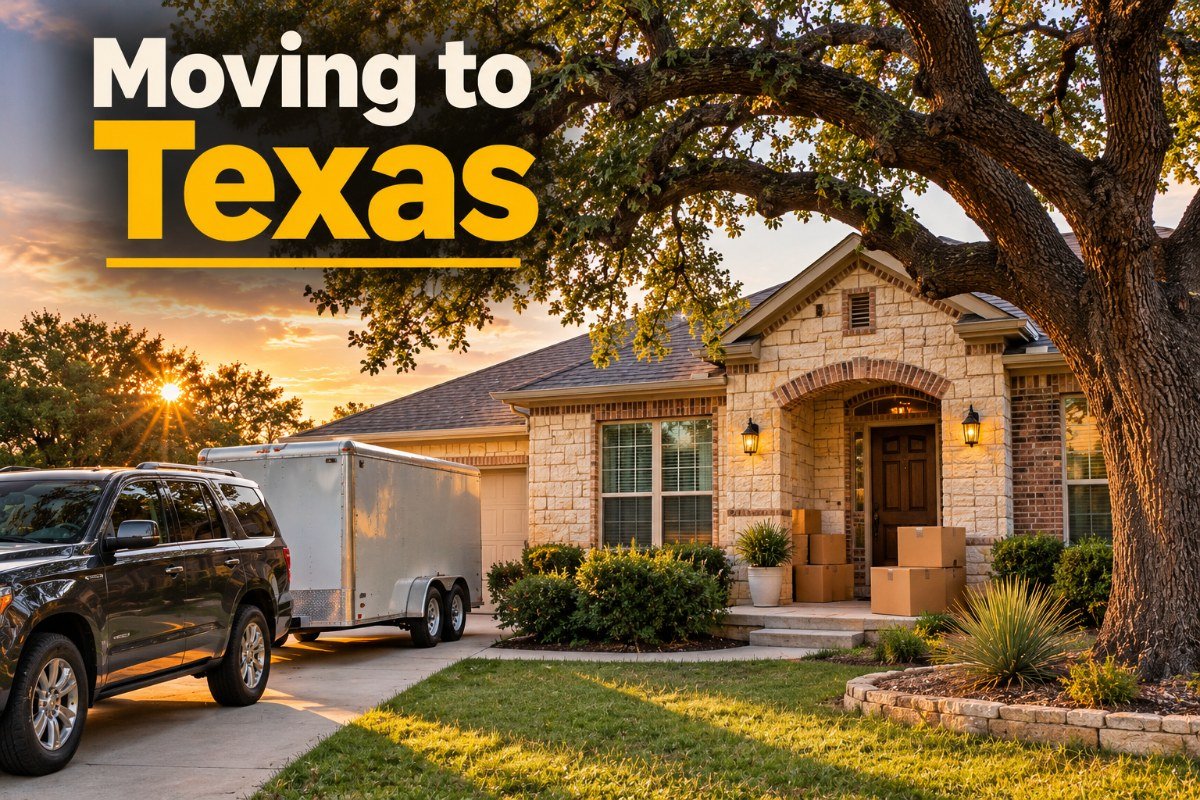
Texas is home to more than 30 million people, and for decades it has been one of the most popular states to move to. People come for jobs, no state income tax, lower home prices than the coasts, and a culture that’s friendly, proud and a little larger than life. Before you pack the truck, here’s what you need to know about moving to Texas.
Why people move to Texas
- No state income tax. Texas is one of a handful of states that don’t tax wages.
- Jobs. Energy, tech, health care, aerospace, logistics and manufacturing all have major footprints here, and many large companies have headquarters in Dallas–Fort Worth, Houston and Austin.
- Housing. Homes are generally more affordable than in California, New York or the Pacific Northwest, especially in the suburbs and smaller cities.
- Space. Bigger lots, bigger homes and wide-open country within an hour of every major city.
- Culture. Barbecue, Tex-Mex, live music, Friday night football and a strong sense of community.
The cost of living: what’s cheaper and what isn’t
Texas is often called affordable, and in many ways it is. But it’s not cheap across the board.
| Cost | How Texas compares |
|---|---|
| State income tax | None |
| Sales tax | 6.25% state rate, plus up to 2% local, for a maximum of 8.25% |
| Property tax | Among the highest in the country, because local governments and schools rely on it |
| Home prices | Lower than the coasts on average, but Austin and parts of Dallas and Houston have risen fast |
| Electricity | Summer air-conditioning bills can be high; most areas let you choose your electricity provider |
| Insurance | Home insurance can be expensive because of hail, wind and hurricanes |
The trade-off is simple: you keep more of your paycheck, but you pay more in property taxes. If you buy a home, file for the homestead exemption with your county appraisal district; it lowers the taxable value of your primary residence.
Choosing where to live
Texas is huge, and each region feels like a different state. A quick overview:
- Dallas–Fort Worth: the biggest metro area, with corporate jobs, fast-growing suburbs like Frisco, McKinney and Plano, and every pro sport.
- Houston: the most diverse city in Texas, with the energy industry, the Texas Medical Center, NASA’s Johnson Space Center and outstanding food. Hot and humid, with hurricane risk.
- Austin: the state capital and a tech hub, with live music, Hill Country scenery and higher housing costs.
- San Antonio: more affordable, rich in history and culture, with a large military presence.
- Smaller cities: El Paso, Lubbock, Amarillo, Corpus Christi, Tyler, Waco and College Station offer lower costs and a slower pace.
See our guide to the best places to live in Texas for families for a closer look.
Your to-do list after you move
- Register your vehicle within 30 days. First get a Texas vehicle inspection, then register at your county tax assessor-collector’s office.
- Get a Texas driver’s license within 90 days. Visit a Texas Department of Public Safety (DPS) office. Book an appointment online; walk-in waits can be long.
- Register to vote once you have your new address.
- Set up electricity. In most of the state you’ll choose a retail electricity provider. Compare plans carefully.
- File for the homestead exemption if you buy a home.
- Check your insurance. Make sure your homeowner’s or renter’s policy covers wind and hail, and consider flood insurance, which is sold separately.
The weather: plan for heat
Texas summers are long and hot. Much of the state sees 100°F days, and the season can run from May into October. Winters are mild in most places, but occasional hard freezes happen, as Texans remember from the February 2021 winter storm. Depending on where you live, you may also deal with hail, tornadoes, flash floods or hurricanes. Our guide to Texas weather by region explains what to expect.
Texas culture: what newcomers notice first
- People are friendly. Strangers say hello, and “y’all” is a real, useful word.
- Football matters, especially on Friday nights. Read A Fan’s Guide to a Texas Friday Night before your first game.
- Distances are big. A “short drive” can mean three hours.
- Barbecue is serious business. Start with our Texas BBQ Guide.
- Texans love Texas. Expect state flags, Texas-shaped everything, and strong opinions about Buc-ee’s and Whataburger.
For more of the local flavor, see Things Only Texans Understand.
Helpful things for your move
- Heavy-duty moving boxes and moving blankets for the long haul.
- Thermal blackout curtains. They make a real difference on summer electric bills.
- A smart thermostat to manage air-conditioning costs.
- A windshield sun shade. You’ll use it from day one.
- A good Texas history book, so you understand your new home.
Is moving to Texas right for you?
If you want job opportunities, no income tax, more space for your money and a culture with real personality, Texas is hard to beat. If you hate heat, need great public transit or want low property taxes, think carefully about where in Texas you land. Weigh both sides in our guide to the pros and cons of living in Texas.
Just moved to Texas? Tell us where you landed on the Texas Journeys Facebook page.
Get More Texas in Your Inbox
Road trips, Texas food, festivals and Friday night football, sent straight to you. No spam, ever.