
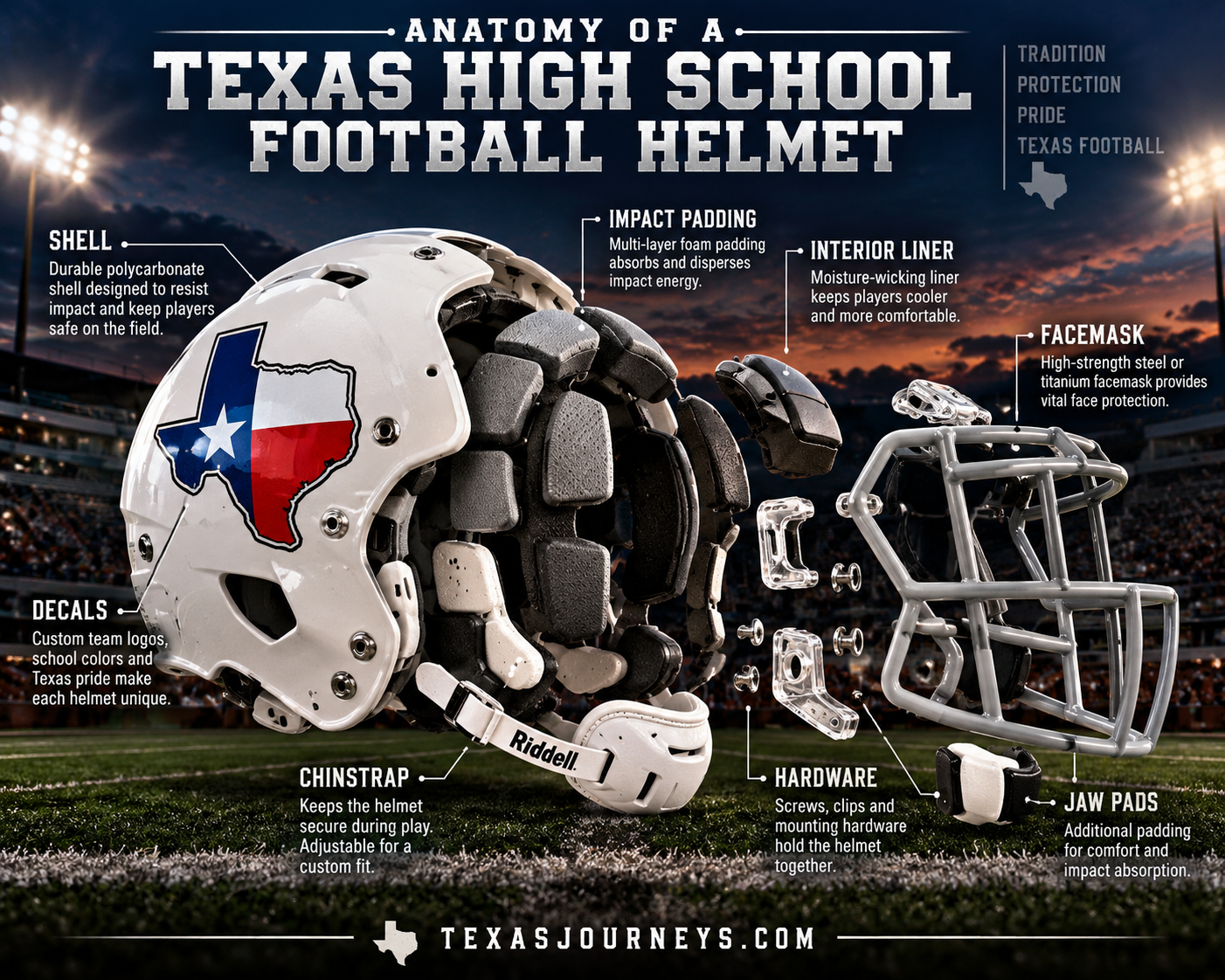
Anatomy of a Texas High School Football Helmet | Parts, Protection & Texas Traditions
Anatomy of a Texas High School Football Helmet: What’s Really Inside?
Every Friday night across Texas, thousands of high school football players strap on their helmets and prepare to represent their schools, teammates, and communities.
To the fans in the stands, a helmet is a symbol of school pride. The colors, logos, and designs can identify a football program from across the stadium.
But underneath those familiar colors is a surprisingly sophisticated piece of protective equipment.
What exactly goes into a modern football helmet, and how do its different components work together?
Let’s take a closer look at the anatomy of a Texas high school football helmet.
1. The Outer Shell: The First Line of Defense
The most recognizable part of a football helmet is its hard outer shell.
Modern football helmet shells are commonly manufactured using durable polycarbonate materials engineered to withstand repeated impacts.
The shell serves several important purposes:
- Distributes impact forces across a larger area.
- Protects the internal padding system.
- Provides attachment points for the facemask and chinstrap.
- Displays the school’s colors, decals, and logos.
The outer shell is also what gives Texas football helmets their unmistakable identities.
Whether it’s a bold school emblem, a traditional letter, or a distinctive color combination, the helmet becomes part of a program’s visual legacy.
Texas football tradition: Some of the most recognizable helmets are the simplest. A single letter or iconic symbol can represent generations of football history.
2. Impact Padding: What’s Underneath Matters Most
Inside the hard shell is a carefully designed system of protective padding.
Depending on the manufacturer and helmet model, this system may include multiple types of foam, air-filled components, and engineered energy-management materials.
These components work together to help manage the forces generated during contact.
Modern padding systems are designed to:
- Absorb and distribute impact energy.
- Reduce certain forces transmitted to the head.
- Improve helmet fit and stability.
- Provide cushioning during normal football activity.
Different manufacturers use different technologies, which is why the interior of one helmet may look very different from another.
Important: No football helmet can prevent every concussion or eliminate the risk of brain injury. Proper fit, safe tackling techniques, appropriate equipment maintenance, and medical protocols all remain essential.
3. The Facemask: Protection With Visibility
A football helmet wouldn’t look complete without its facemask.
Typically constructed from strong metal alloys, facemasks are designed to help protect a player’s face while allowing visibility and airflow.
But here’s something casual fans might not realize:
Not every football player uses the same facemask configuration.
Different positions and personal preferences can influence facemask selection.
For example:
- Quarterbacks often favor designs that provide a relatively open field of vision.
- Linemen may use configurations with additional bars across the face.
- Receivers and defensive backs may prefer lighter or more open designs.
The exact configuration must be compatible with the helmet and comply with applicable rules.
The facemask is attached to the shell using specially designed mounting hardware.
4. The Chinstrap: Small Component, Big Responsibility
One of the most overlooked pieces of football equipment is the chinstrap.
Its job is straightforward: help keep the helmet securely positioned on the player’s head.
A chinstrap generally includes a protective chin cup, adjustable straps, and attachment hardware.
When fitted correctly, it helps maintain helmet stability during movement and contact.
A helmet that shifts excessively or comes off during play cannot provide its intended level of protection.
That’s why equipment managers and athletic trainers pay close attention to helmet fit and fastening systems.
5. The Interior Liner: Comfort Meets Performance
Football games in Texas can be played under some demanding conditions.
Early-season temperatures can remain high even after sunset, especially during August and September.
Inside many helmets, liner materials help improve comfort, manage moisture, and maintain contact between the player’s head and the padding system.
Depending on the helmet model, interior components may include removable comfort liners and specialized fit pads.
A comfortable helmet isn’t just about convenience. Properly positioned equipment is an important part of maintaining the helmet’s intended fit.
6. Jaw Pads: An Important Part of the Fit
Jaw pads sit along the lower interior sides of many football helmets.
These pads help stabilize the helmet around the player’s jaw and cheek areas.
Their functions include:
- Supporting a secure fit.
- Reducing unwanted helmet movement.
- Providing cushioning and comfort.
- Helping maintain the helmet’s position during activity.
Jaw pads are available in different configurations and thicknesses, depending on the helmet model.
Choosing the correct size is part of the fitting process, not simply a matter of preference.
7. Helmet Hardware: The Parts Fans Rarely Notice
Look closely at a football helmet, and you’ll find numerous small components holding everything together.
These may include screws, clips, fasteners, snaps, and facemask attachment systems.
Although they rarely receive attention, these components are essential.
Loose, damaged, missing, or incompatible hardware can compromise the helmet’s intended performance.
That’s why regular equipment inspection and manufacturer-approved maintenance are important parts of high school football programs.
8. The Decals: Where Texas Football Tradition Comes Alive
Now we get to the part that Texas high school football fans probably appreciate most.
The helmet logo.
For many programs, a helmet design is more than a piece of artwork. It represents a school’s history, community, and football identity.
Think about the recognizable helmet traditions associated with programs such as:
- Southlake Carroll Dragons
- Duncanville Panthers
- Allen Eagles
- Katy Tigers
- North Shore Mustangs
- Permian Panthers
- Westlake Chaparrals
Each program has built an identity that extends far beyond the playing field.
Some fans recognize their school’s helmet instantly, even without seeing the jersey.
Others remember the exact helmet designs worn during championship seasons or legendary rivalry games.
And for former players, seeing that familiar logo can bring back memories of practices, locker rooms, teammates, and unforgettable Friday nights.
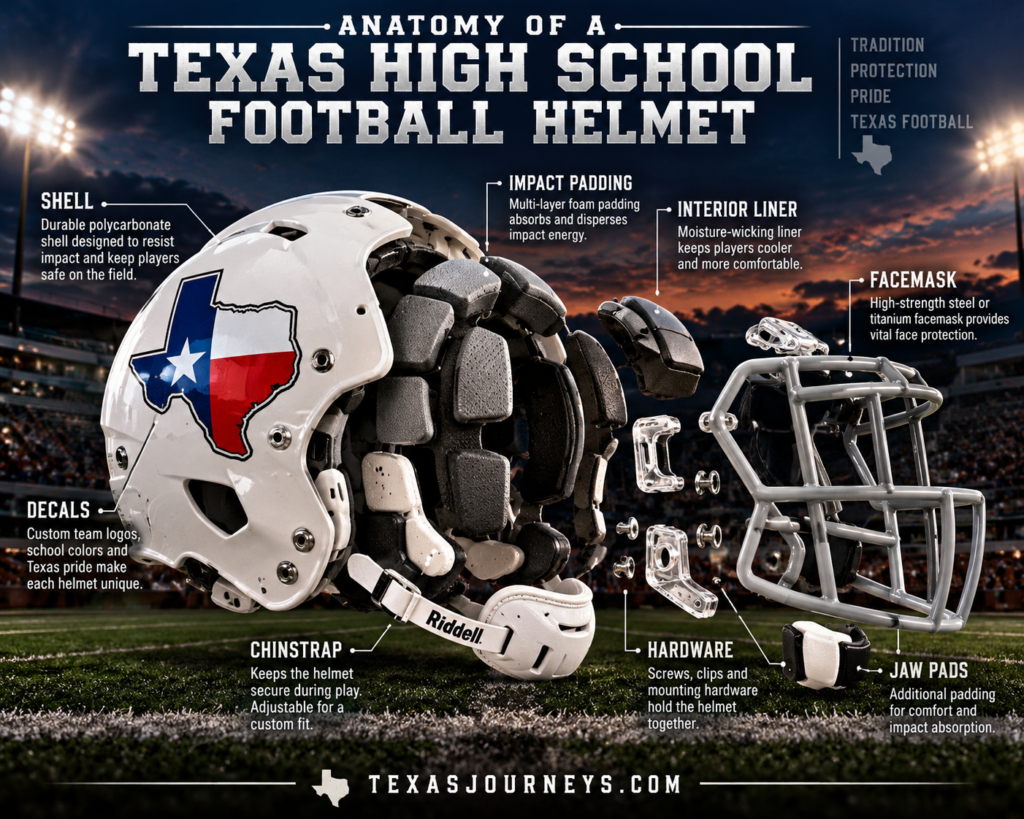
The Texas flag design in our anatomy illustration represents that shared statewide football identity rather than a particular school’s official helmet.
9. How Often Should High School Football Helmets Be Inspected?
Football helmets require ongoing attention throughout their service lives.
Coaches, athletic trainers, equipment managers, and players all have roles in identifying equipment concerns.
Helmets should be inspected according to manufacturer instructions and applicable school or governing-body requirements.
Programs should also follow the manufac